_edited.jpg)
.png)
Drive Control Foundations
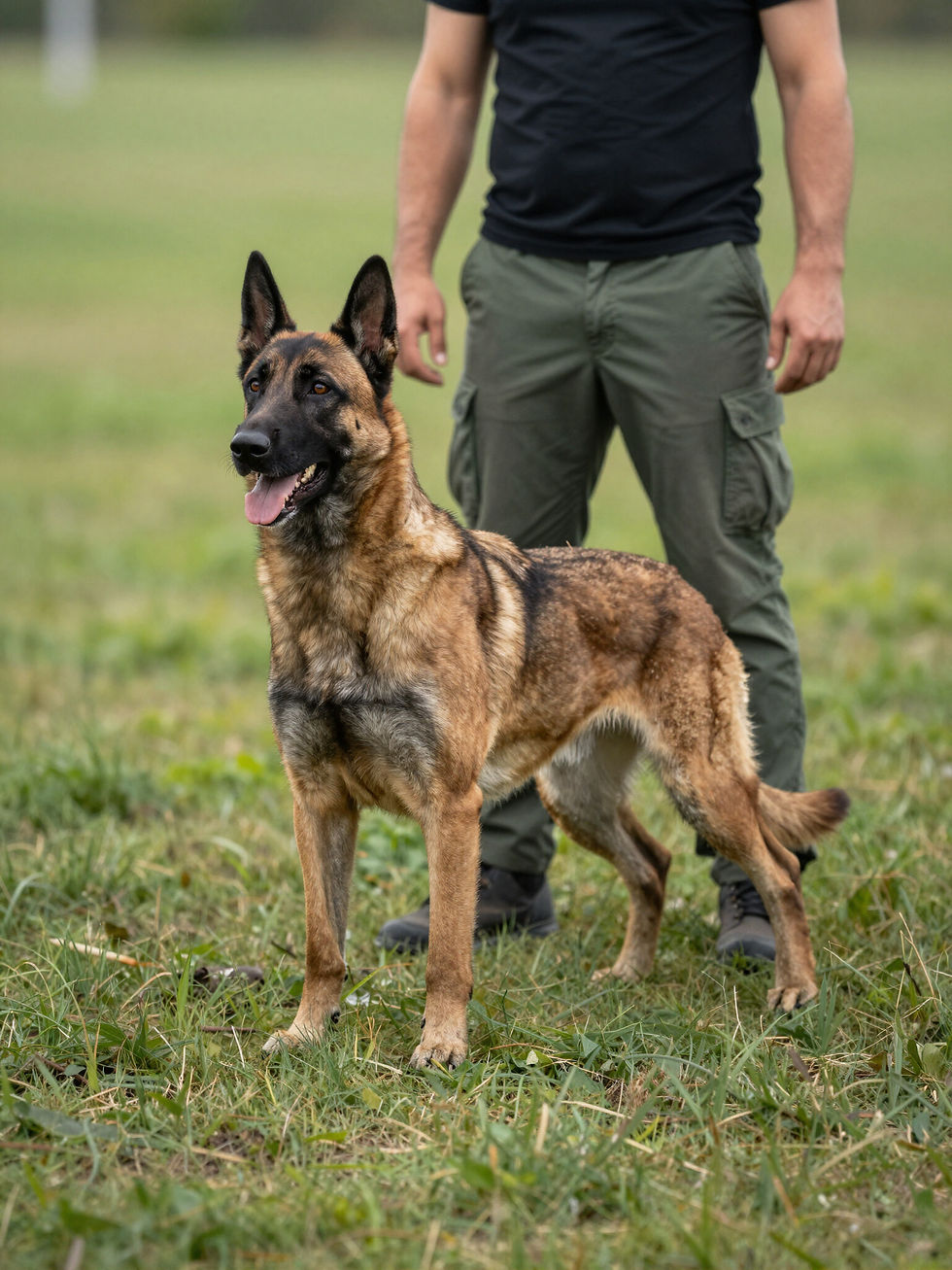
Drive control is one of the most misunderstood and most critical components of proper canine training. At MalX Core K9, drive control is not about suppressing drive, shutting dogs down, or forcing compliance. It is about teaching dogs how to access, regulate, and disengage from drive with clarity and purpose.
All dogs operate through motivational systems known as drives. This foundation is essential not only for sport and working dogs, but also for family dogs who struggle with over arousal, poor impulse control, or difficulty settling in daily life.
.jpeg)
What Drive Control Really Means
Drive control is the ability for a dog to enter a state of high motivation and excitement, perform a task with precision, and then disengage calmly when asked. A dog with strong drive control can switch between high intensity and neutrality without conflict or stress.
True drive control produces clarity, stability, and emotional regulation. The dog learns that access to drive is earned through structure and maintained through engagement with the handler.
Why Drive Control Matters
Many behavioral issues stem from unmanaged drive rather than defiance or aggression. Excessive barking, leash reactivity, jumping, and inability to settle are often signs of drive without direction.
Drive control creates balance. It allows dogs to be powerful when appropriate and calm when required, building emotional resilience and confidence.
Our Approach to Training
At MalX Core K9, drive control foundations are built through structured engagement, not suppression. We teach dogs how to access drive intentionally, maintain clarity during arousal, and return to neutrality without conflict.
Training focuses on developing the dog’s ability to think while in motion and intensity. This includes teaching clean starts, clear markers, controlled engagement, and reliable outs and disengagements.
For Puppies & Young Dogs
Foundations are introduced early to prevent frustration behaviors and teach self-regulation. Early work includes structured play, impulse control, and clear rules for access to stimulation. Puppies learn that excitement does not mean chaos and that calm behavior is equally rewarding.
For Adult & Reactive Dogs
For dogs showing reactivity or over-arousal, training helps rewire emotional responses. Improving clarity and structure reduces reactive behaviors. The focus shifts from managing behavior to teaching emotional regulation and decision making under pressure.
The Result of Proper Drive Control
Dogs trained with strong foundations are clear, confident, and reliable. They understand boundaries without losing motivation. For owners, this creates a dog that is easier to live with, more responsive in training, and mentally fulfilled.
Drive control is not about creating robotic dogs. It is about creating dogs who understand how to use their intensity productively and safely. Control is earned through communication, structure, and trust, not force.
.jpeg)
How Drive Is Built, Not Just Managed
One element often overlooked in discussions of drive control is that drive itself is not fixed. While genetics determine a dog’s baseline intensity and thresholds, drive expression is shaped through learning, reinforcement history, and environmental feedback.
In our program, drive is intentionally built alongside control. This means we do not attempt to regulate drive that has never been properly developed. Dogs are first taught how to access motivation cleanly through clear markers, predictable reinforcement, and purposeful engagement. Only once drive is understood does true control become possible.
This prevents the common cycle where dogs are corrected for intensity they were never taught to understand.
The Role of Neutrality and Recovery
A critical component of drive control that is often misunderstood is recovery time. The ability to return to a neutral emotional state after stimulation is as important as performance during arousal.
Dogs lacking recovery skills remain mentally elevated long after training ends. This often shows up as pacing, vocalization, inability to settle, fixation behaviors, or delayed reactivity at home.
Drive control foundations explicitly teach recovery. Dogs learn how to disengage, breathe, and reset their nervous system without frustration or suppression. This is what allows high drive dogs to live balanced daily lives instead of existing in constant stimulation seeking cycles.
Handler Influence and Clarity
Drive control is not solely a dog skill. It is a handler skill.
Dogs mirror handler timing, energy, and consistency. Unclear markers, delayed rewards, or emotional handling create conflict inside drive, even in well bred dogs.
Our training places heavy emphasis on handler mechanics, communication timing, and consistency. Clients are coached to understand how their own behavior influences arousal levels, engagement quality, and disengagement success.
This ensures drive control transfers beyond the training field into real life scenarios.
Drive Control Across Environments
True drive control is not situational. A dog that performs well in a controlled training space but loses clarity in public environments has not completed foundational work.
We systematically introduce environmental pressure such as new locations, distractions, movement, noise, and unpredictability while maintaining the same expectations for engagement and disengagement.
This is how dogs learn that clarity applies everywhere, not just where training feels familiar.
Safety, Ethics, and Long Term Stability
Proper drive control is also a safety issue. Dogs that cannot disengage from drive are more prone to redirection, accidental bites, handler conflict, and emotional burnout.
By teaching dogs how to modulate intensity rather than live inside it, we preserve both the dog’s mental health and the handler’s ability to maintain control in real world situations.
This approach supports long term soundness, not short term compliance.
Who Benefits Most From Drive Control Foundations
While all dogs benefit from drive control, this work is especially valuable for:
High drive working breeds in pet homes
Sport prospects needing clarity under pressure
Reactive dogs with frustration based behaviors
Young dogs showing early impulse control challenges
Handlers seeking reliability without suppression
Drive control is not a specialty add on. It is the framework that allows all other training to succeed.
The MalX Core K9 Philosophy on Drive
At MalX Core K9, drive is not something to fear or flatten. It is a resource. When understood, structured, and respected, drive becomes the foundation for confidence, stability, and partnership.
Control is not imposed. It is taught, earned, and maintained through clarity and trust.
This is the difference between managing behavior and developing a dog.